
Initiatives for Climate Change
Approach and policy toward climate change
We recognize that climate change is one of the most important environmental issues we confront. As a corporate citizen and as a business operator that manufactures and sells products, we promote initiatives on climate change by performing what we can in our daily operations. We also consider and implement measures to reduce the long-term impact on climate change.
Greenhouse Gas (GHG) Emissions
In 2025, the impact of solar panel installation and other measures resulted in a 13.9% reduction in total SCOPE1(direct emissions associated with fuel combustion in boilers, furnaces) and SCOPE2(indirect emissions associated with the purchase of electricity, steam, heat, or cooling) emissions compared to 2021.
Going forward, we will take various measures to achieve our goal of reducing total emissions by 42% by FY2030 compared to FY2021 levels. We will also calculate GHG emissions related to Scope 3 (indirect emissions throughout the entire supply chain other than Scope 1 and Scope 2) and make efforts to reduce them.
| Emissions by Scope | FY2021 [t-CO2] |
FY2022 [t-CO2] |
FY2023 [t-CO2] |
FY2024 [t-CO2] |
FY2025 [t-CO2] |
|---|---|---|---|---|---|
| Scope 1 | 12,105 | 13,126 | 11,755 | 9,180 | 10,146 |
| Scope 2 - Market standard - | 3,200 | 3,201 | 2,613 | 2,809 | 3,039 |
| Total | 15,305 | 16,327 | 14,369 | 11,990 | 13,184 |
* Market standard = Method using emission factors based on electricity purchase contracts
| Scope 3 Emissions breakdown |
FY2021 | FY2022 | FY2023 | FY2024 | FY2025 | |||||
|---|---|---|---|---|---|---|---|---|---|---|
| Emissions [t-CO2] |
Ratio [%] |
Emissions [t-CO2] |
Ratio [%] |
Emissions [t-CO2] |
Ratio [%] |
Emissions [t-CO2] |
Ratio [%] |
Emissions [t-CO2] |
Ratio [%] |
|
| Category 1 | 24,075 | 61 | 23,910 | 57 | 22,556 | 58 | 21,373 | 55 | 22,922 | 64 |
| Category 2 | 2,009 | 5 | 1,796 | 4 | 6,471 | 17 | 9,196 | 24 | 4,429 | 13 |
| Category 3 | 3,744 | 10 | 4,006 | 10 | 3,616 | 9 | 3,128 | 8 | 3,458 | 10 |
| Category 4 | 6,162 | 16 | 8,895 | 21 | 4,113 | 11 | 2,501 | 6 | 2,173 | 6 |
| Category 5 | 1,227 | 3 | 1,381 | 3 | 1,225 | 3 | 1,068 | 3 | 1,033 | 3 |
| Category 6 | 41 | 0 | 43 | 0 | 43 | 0 | 42 | 0 | 43 | 0 |
| Category 7 | 106 | 0 | 109 | 0 | 111 | 0 | 112 | 0 | 117 | 0 |
| Category 9 | 1,869 | 5 | 1,601 | 4 | 776 | 2 | 1,449 | 4 | 1,248 | 3 |
| Total | 39,232 | 100 | 41,741 | 100 | 38,910 | 100 | 38,870 | 100 | 35,424 | 100 |
SBT for SMEs Certification

Our Group has obtained SBT for SMEs certification from SBTi with the target of reducing GHG emissions related to Scope 1 and Scope 2 by 42% compared to FY2021 levels by FY2030 through the installation of solar panels and hydrogen boilers. For Scope 3, we will make efforts to calculate and reduce CO2 emissions based on the GHG Protocol.
What is SBT for SMEs/SBTi?
SBT is a greenhouse gas emission reduction target that is compatible with the level required by the Paris Agreement target (to limit the global average temperature rise well below 2℃ above pre-industrial levels and to pursue efforts to limit warming to 1.5℃). The SBT for SMEs (small and medium-sized enterprises) is a target applicable to non-subsidiary and independent companies with less than 500 employees, and is slightly less burdensome than a standard SBT, making it easier for small and medium-sized enterprises to work toward.
SBTi is an international partnership between CDP, the UN Global Compact, WRI (World Resources Institute), and WWF (World Wide Fund for Nature) that defines and promotes best practices in science-based target setting and independently evaluates corporate targets.
Toward reductions in greenhouse gas (GHG) emissions
Following the installation of solar panels on the Gunma Plant’s warehouse rooftop in 2021, additional panels were installed on the main Gunma Plant building in 2024 and the Chiyoda Plant in 2026. As a result, in 2025, 6.0% of the total electricity used by our entire Group was covered by solar energy, leading to a reduction of 295 tons of GHG emissions. Separately, in 2023, by installing a new steam reformer that delivers the steam generated by the boiler to the point of use, we had the effect of reducing greenhouse gas emissions by approximately 1%.
Sustainable Chiyoda Plant
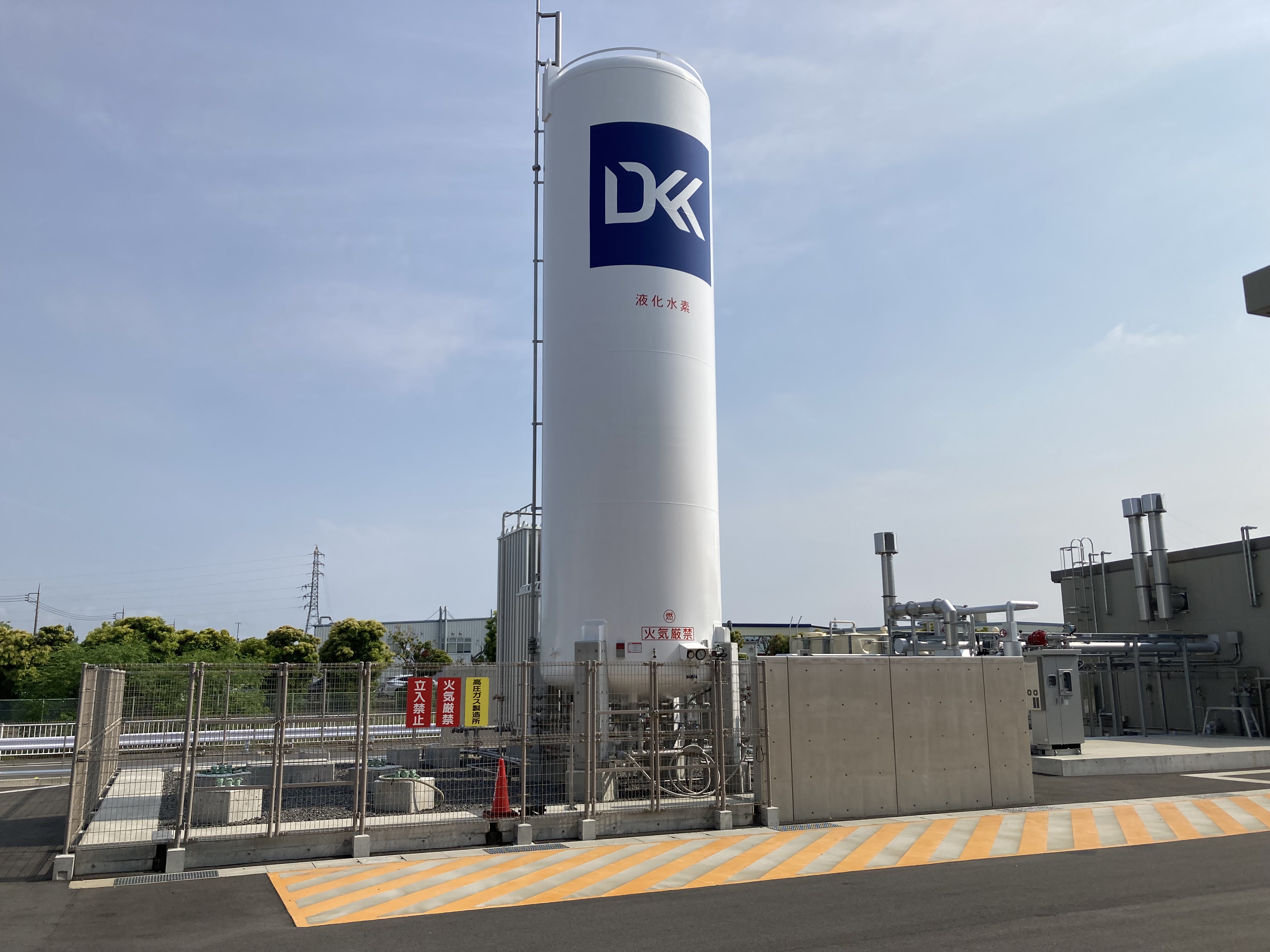
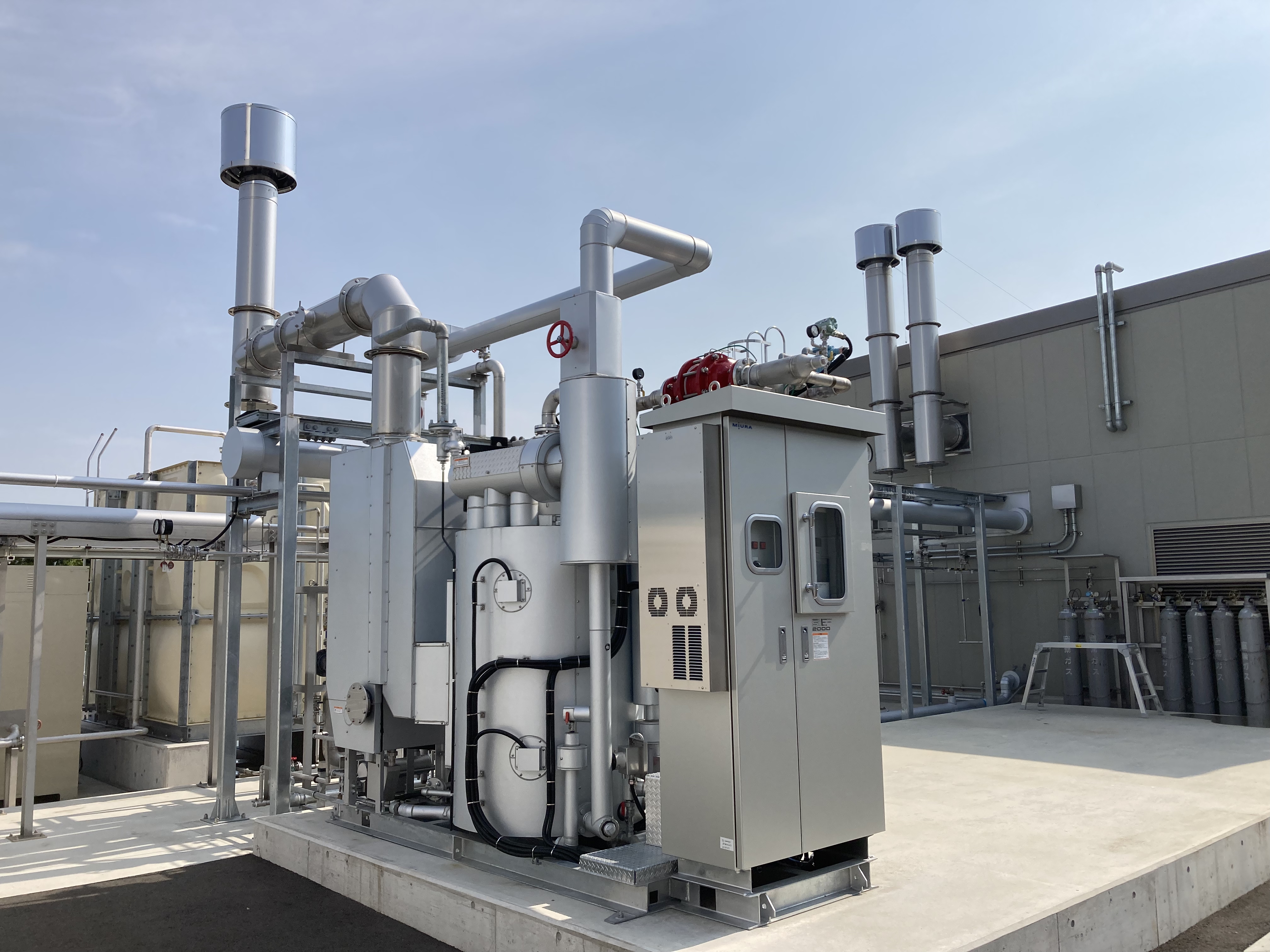
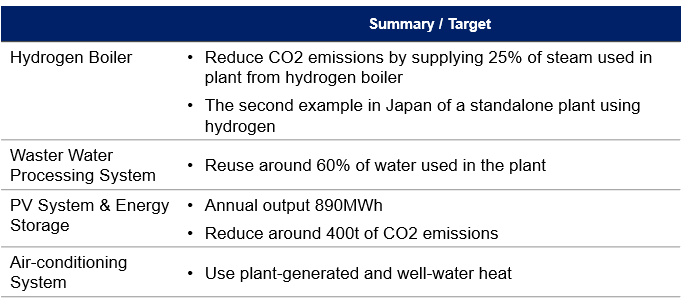
At the newly established Chiyoda Plant, we have installed decarburization-focused equipment to promote the sustainability of our manufacturing processes. The facility’s capital investments were financed through a "Green loan", which is exclusively allocated to projects with environmental improvement benefits.
Awarded CDP 2025 Climate Change Score of “B”
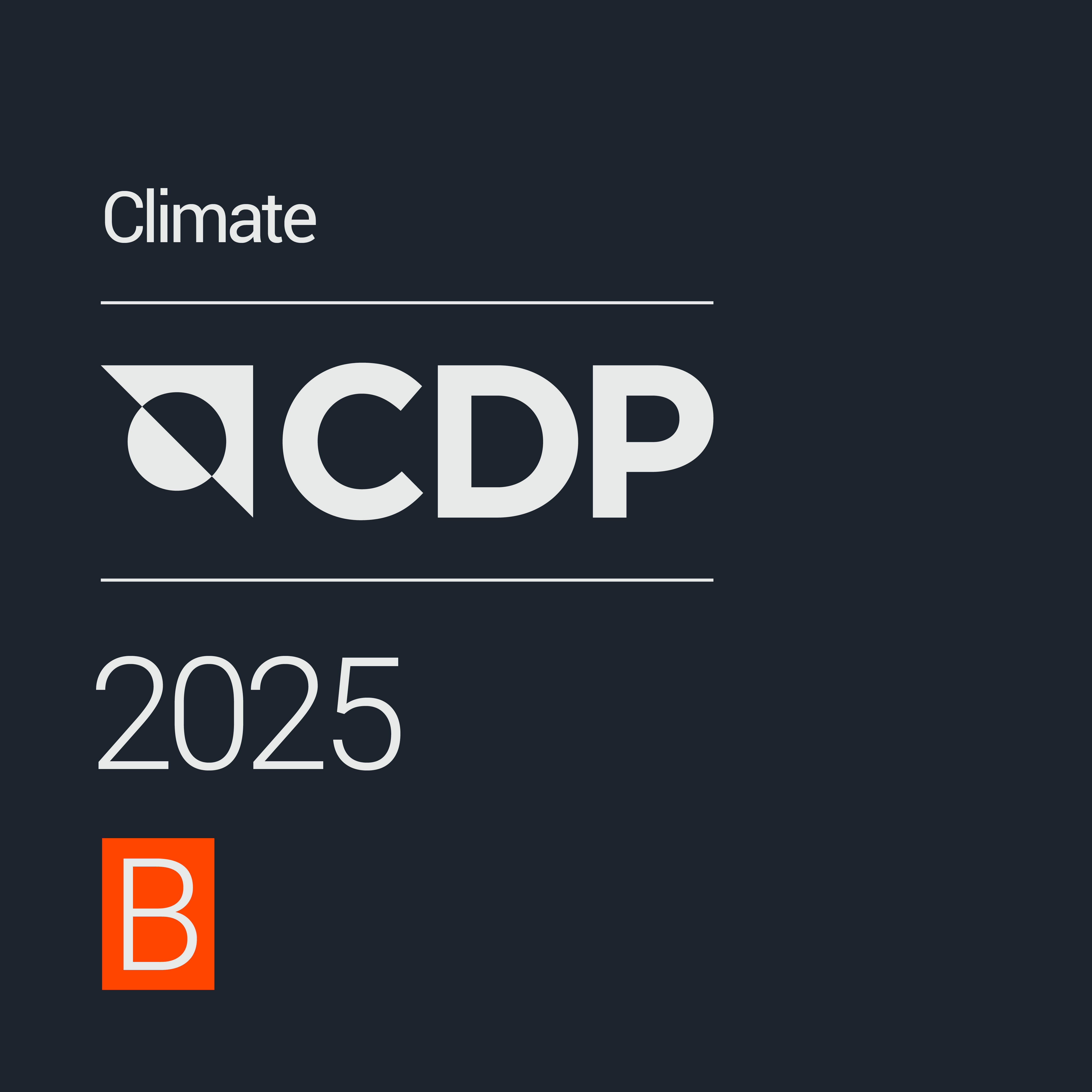
Our Group provided responses to the 2025 Climate Change Questionnaire conducted by the environmental NGO CDP, and was awarded a score of “B”. In the CDP evaluation framework, a company that receives a B score is described as a “management” level entity, meaning it is aware of the climate-change risks and opportunities and has taken specific action. In the CDP’s eight-stage scoring (A, A-, B, B-, C, C-, D, D-), B is third from top.
What is CDP?
The CDP (Carbon Disclosure Project) is an international environment-related not-for-profit non-governmental organization (NGO) established in 2000 and headquartered in London. In recognition of demand among global institutional investors and major purchasing companies with a high level of interest in environmental issues, it aims to promote global climate action by corporations and government bodies, to which end it operates an information disclosure system for such action.
Toward reductions in greenhouse gas (GHG) emissions during use of products
Our Group’s products are characterized by their lighter weight as they are about 1/2 to 2/3 the weight of genuine leather or PVC (polyvinyl chloride).
Our products are adopted by airlines that demand materials lighter by even one gram, and automobile manufacturers that promote development of electric vehicles, both of which are making efforts to reduce carbon dioxide and other greenhouse gas emissions. We support our customers’ sustainability efforts by providing our products.
Initiatives for TCFD (Task Force on Climate-Related Financial Disclosures)
Our Group is working on various measures to mitigate climate change. In February 2023, we announced our endorsement of the TCFD recommendations and have been studying the risks and opportunities posed by climate change to our business as well as measures to address them. We have summarized our findings in accordance with the TCFD’s disclosure framework as follows. As part of our sustainability management, which aims to achieve sustainable corporate growth and a sustainable global environment and society at the same time, we will continue to further promote our response to climate change and appropriately disclose information in accordance with the framework of the TCFD recommendations.
What is TCFD?

TCFD refers to the “Task Force on Climate-Related Financial Disclosures” established by the Financial Stability Board (FSB) at the request of the G20, which released its final report in June 2017, recommending that companies disclose their climate change-related “governance,” “strategies,” “risk management,” and “indicators and targets.”